Watch a video about our Mt. Lemmon home base.
The summit of Mt. Lemmon is a “Sky Island‚” (altitude 2795 m; 9171 ft) located north of The University of Arizona in the Coronado National Forest in the Catalina mountains; a driving distance of ~45 miles and ~15 miles line-of-sight.
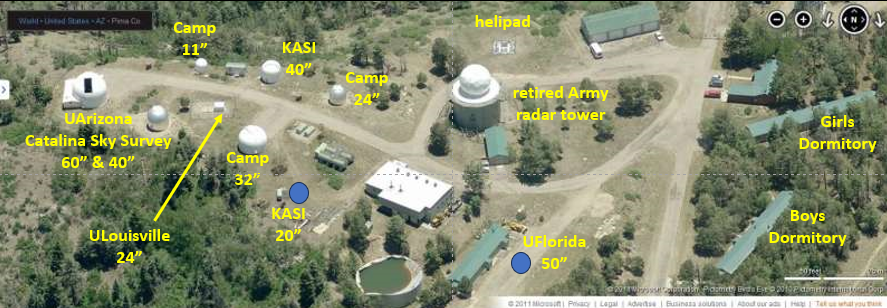
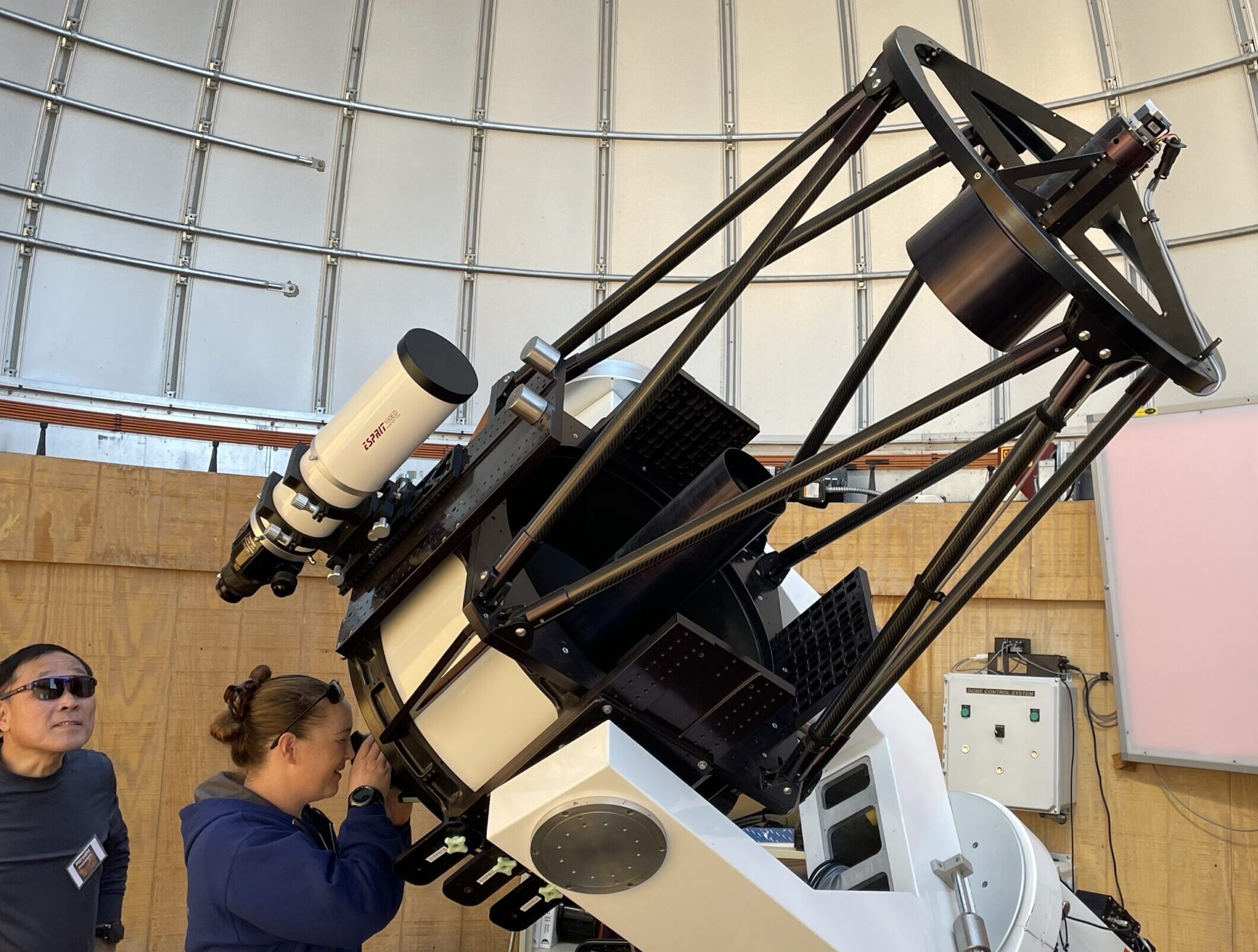
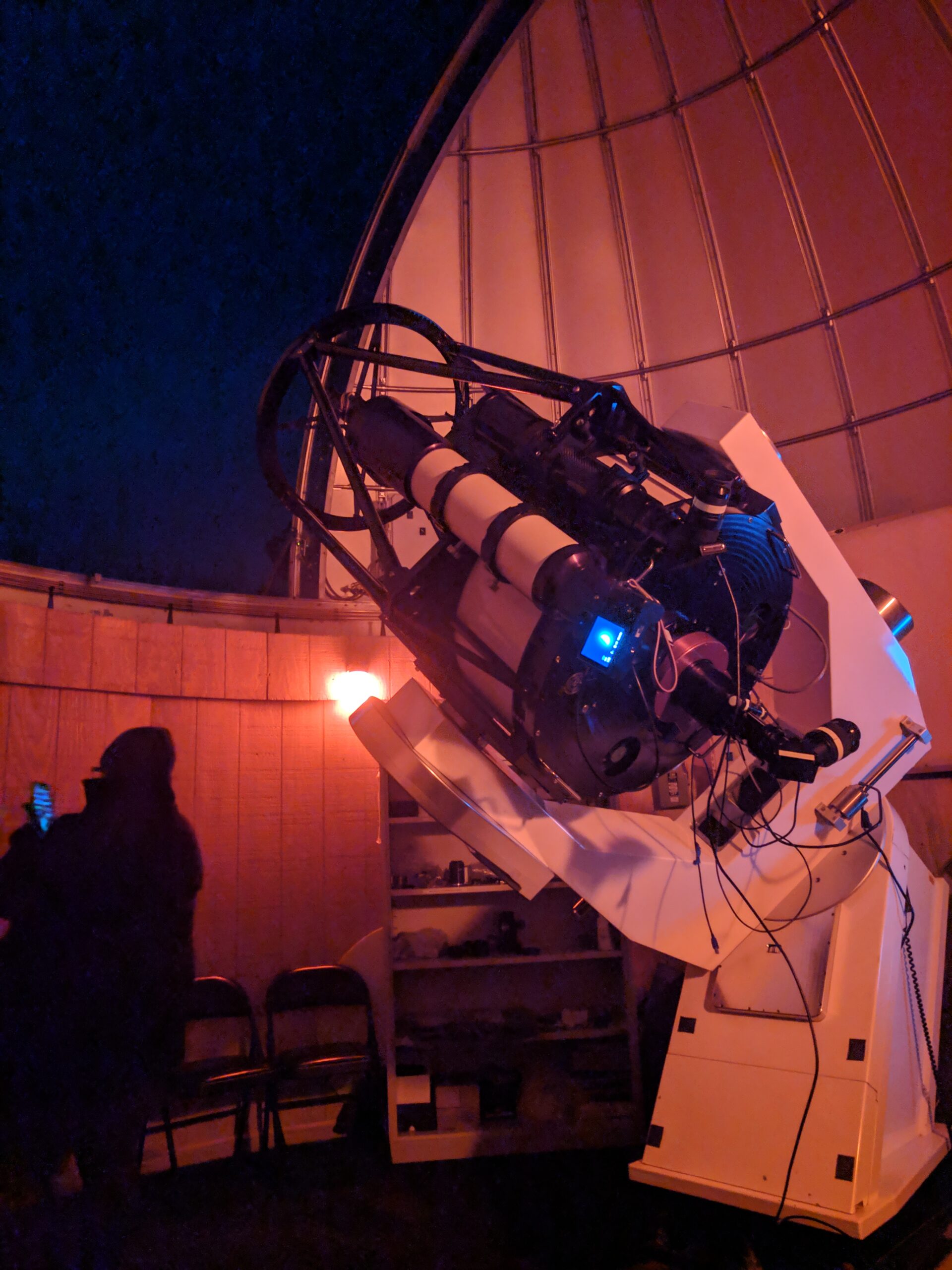
This 20 acre site played an historic role in the defense of our country and an important role in the development of infrared astronomy (Ref #1; Ref #2). The left view shows the dormitories and the Learning Center of the Mt. Lemmon SkyCenter, an educational spinoff of Astronomy Camp. Campers operate the 24″ (Phillips) and 32″ (Schulman) reflecting telescopes. At bottom center is a 60″ telescope used by the Catalina Sky Survey, the world’s leading discoverer of Potentially Hazardous Asteroids. At the extreme right center is another 60″ telescope operated by the University of Minnesota. The adjacent building houses a half-court gymnasium for lectures, demos, and recreation. Most of the Camp’s daytime activities, including meals, take place in the SkyCenter and Minnesota facilities.
The summit area is maintained by The University of Arizona for research (astronomy, geology, ecology, etc.) and science education under the terms of a Permit with the U.S. Forest Service. The site operates on commercial electrical power with its own standby generator. Water is obtained from several deep wells and stored in 500,000 gal. tanks (right center). A full-time supervisor resides at the site. Emergency medical personnel are based ~3 miles away and a helicopter landing area is available for emergencies.
A detailed history of the telescopes established on Mt. Lemmon and Bigelow and their roles in the Apollo program, Solar System science, and the pioneering of infrared astronomy is available at The University of Arizona’s Arizona’s Lunar and Planetary Lab. Some specific details about telescopes used by Astronomy Camp’s alumni follow below.
Historical Background
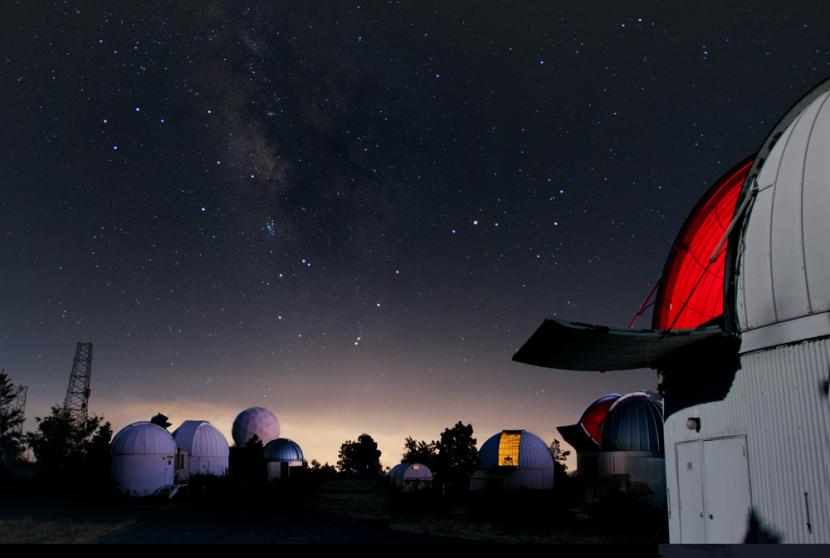
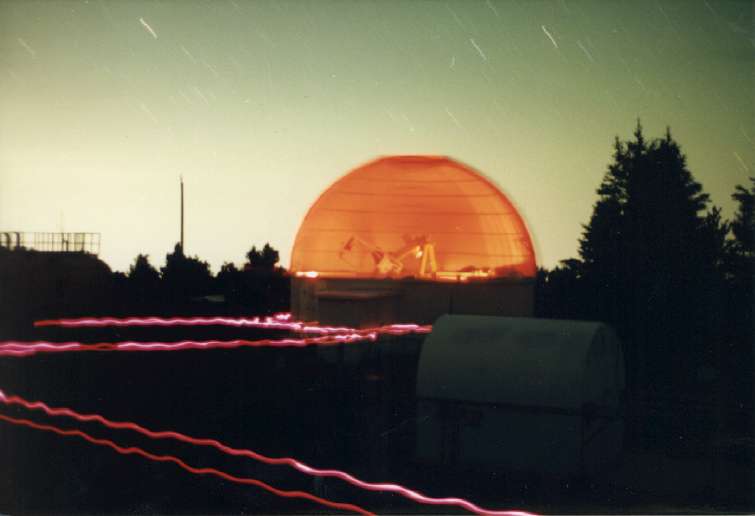
The summit of Mt. Lemmon was formerly a Radar Base of the Air Defense Command, specifically the 684th Aircraft Control and Warning Squadron. Watch this video for a brief, illustrated history. It was the farthest south and the highest of the nation’s radar installations. In October 1970, the base was converted into an observatory and served as the highest altitude, continental site for infrared astronomy. Until 2003, a geodesic dome (aka, the “Army Tower” seen standing above other domes above) housed the last of the radar tracking facilities which was operated by Ft. Huachuca. This station was also able to direct the Space Shuttle to an emergency landing in White Sands, New Mexico and was involved with initial testing of cruise missile navigation. The southernmost portion of the summit site (top right in the aerial view) is a former communications center for the Titan missile defense system.
Further information, and photos, about the role of Mt. Lemmon and the Air Defense Command can be found in the Arizona Daily Star and at The Air Defense Radar Veterans Assoc. (select “Radar Museum,” then “Radar Sites,” and search for the location of “Lemmon”). In 2004, the Astronomy Camps were based inside the Army Tower, and students viewed sunset from the upper roof.
The historic 20″ (Jamieson) and 40″ telescope domes (familiar to many Camp alumni prior to 2008) were reassigned to the 24″ (Phillips) and 32″ (Schulman) telescopes now used for public programs by the SkyCenter. The 20″ telescope was a gift from the estate of Dr. John Jamieson who helped pioneer the emerging field of infrared astronomy. The dome and related infrastructure were provided through educational funds from the NSF Career Grant of Dr. Laird Close for use by our JWST/NIRCam education program for Girl Scout leaders. This telescope featured a German-equatorial mount and produced excellent images. It was used simultaneously for both infrared and visible observations.
The optics of the 40″ telescope were reconfigured with a new secondary mirror and relocated in anew dome (funded by the Caris Foundation) slightly north to support the Catalina Sky Survey. The f/16 optical design of the 40″ telescope features an inverted Dall-Kirkham (Pressman-Camichel) arrangement with a single-arch spherical primary mirror (f/2) and oblate ellipsoid secondary. Equipped with relative encoders on a German equatorial mount, the 40″ now has a fast speed, motorized slew motion in right ascension.
With the old 40″ and 20″ telescopes, Astronomy Campers learned basic principles of telescopic observation and conducted research projects by eyepiece, photometer, CCD imagers, and a CCD spectrograph in visible light. Many Camp alumni will remember hand-slewing the 40″ telescope and using setting circles to point accurately! After several summers with his own research projects, former Camper Nathan Robbins wrote a poetic “Ode to Age,” describing his fondness for the 40″ telescope.
The 60″ Cassegrain reflecting telescope (now used by the Catalina Sky Survey) was built in the pioneering days of infrared astronomy and featured prominently in the development of instrumentation for the Kuiper Airborne Observatory. Astronomy Camp used this telescope until 2008; some Campers will remember working in small teams to point the telescope by hand! The telescope’s optics incorporate a parabolic primary mirror (f/2) with interchangeable secondaries to achieve focal ratios of either f/16 (visible) or f/45 (infrared). Both the former 40″ and 60″ telescopes were developed “in-house” at the Lunar and Planetary Laboratory’s optics shop by optician Mr. Robert Waland. They are described in his book “Optics of the Cassegrain.”
The 60″ Cassegrain reflector of the Mt. Lemmon Observing Facility (MLOF) is operated by the University of Minnesota. This f/15 infrared-optimized telescope played a fundamental role in the pioneering developments of infrared astronomy in the 1970’s. During that time, the summit of Mt. Lemmon was the highest altitude, continental site for infrared astronomy. The telescope’s history is documented in the book “In Quest of Telescopes” (M. Cohen, 1980, Cambridge University press). Advanced Astronomy Campers have used the 2MASS camera on this telescope for infrared imaging observations in the so-called J,H,K wavelengths bands in the near-infrared spectrum.
The foreground of the top, right picture shows a roll-off-roof building housing the robotically operated 24″ Manner telescope of the University of Louisville. The telescope was moved to Mt. Lemmon in 2014, from Tennessee as part of the Shared Skies collaboration with the University of Southern Queensland. Previously, this dome contained an automatically observing 10″ f/10 telescope operated by the Optical Communications Group at the Jet Propulsion Laboratory (JPL) for “atmospheric visibility monitoring” measurements. Three such systems were located throughout the Southwest. They operated autonomously to collect data on stellar intensities in conjunction with weather information. The goal was to determine experimentally the statistics of atmospheric transmission in order to assess the suitability of optical communication with deep space probes. Articles describing this facility were published in Laser Focus World (June 1998, pp. 39-141) and in the SPIE (1997).
Other telescopes located at the summit of Mt. Lemmon include the 50″ Dharma telescope used remotely by the University of Florida for detection of exoplanets via Doppler spectroscopy and the 20- and 40-inch telescopes of the Korea Astronomy and Space Science Institute (KASI).